
Commercial Roofing Company Austin TX: Services & Expectations
October 27, 2026
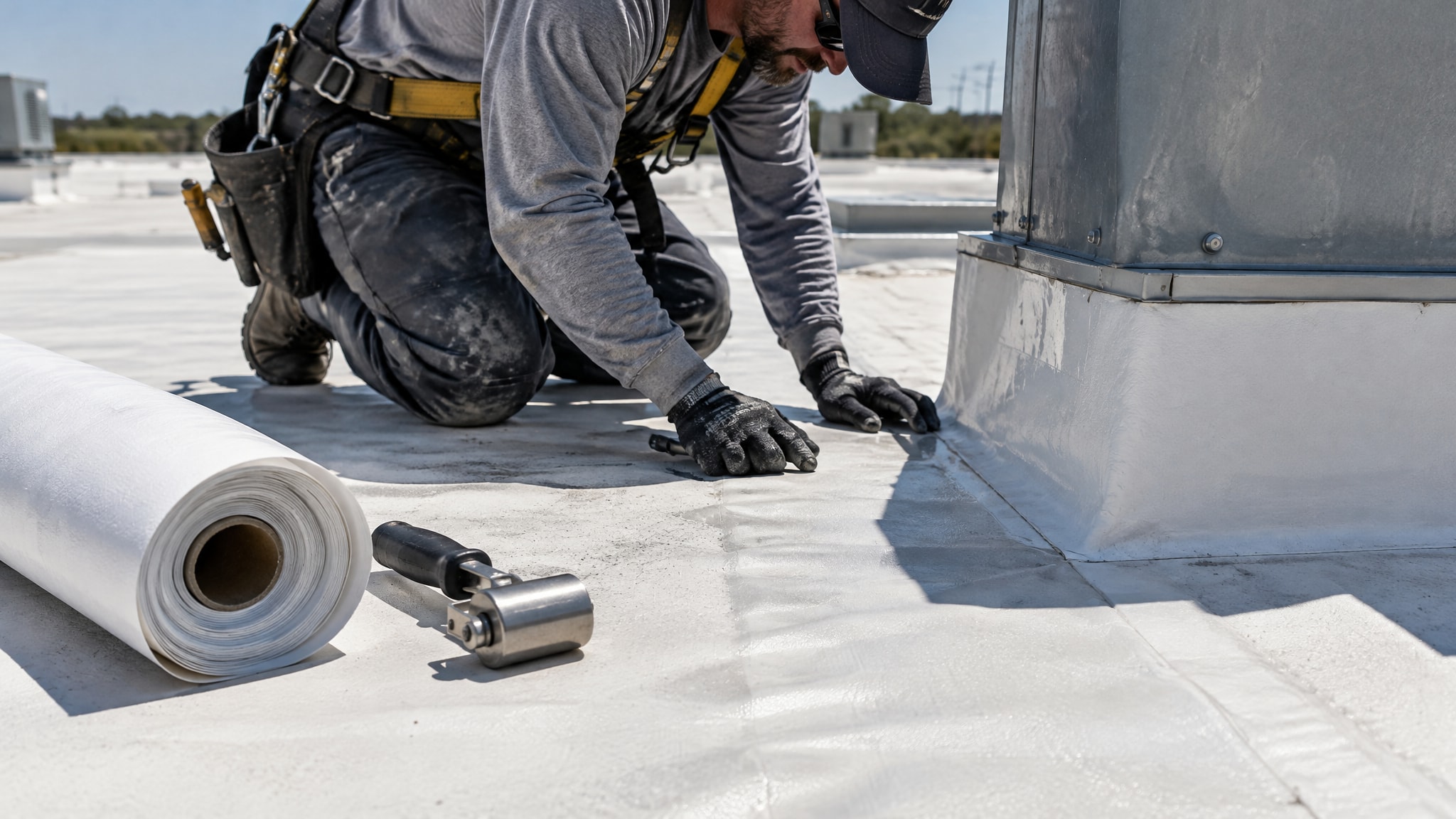
Selecting a commercial roofing company in Austin, TX takes more than comparing bid sheets or checking availability. You need a partner who understands how Central Texas weather cycles affect membrane performance, and who stays accountable long after the final invoice is paid. National franchises often rotate crews and project managers, leaving you to explain your building's history to a new face every few years.
TWT Outdoor Living brings over 70 years of combined construction and roofing experience to every commercial project. That's family-owned accountability, not franchise turnover. This depth of local knowledge means your roof system gets specified for actual Austin conditions, not generic regional averages. You get a team that treats your facility as a long-term asset, not another job number in a national database.
Why Local Accountability Matters for Austin Commercial Roofs
Your commercial property faces thermal shock and hail events that generic specifications often fail to address over the full life of the membrane. Local contractors with deep Central Texas experience understand how regional weather extremes shape flat roof material selection and installation timing better than out-of-area teams do. When a storm hits, you need a roofer who can mobilize immediately because they live here, not one waiting on corporate approval from another state.
Navigating Central Texas Weather Extremes
Austin summers hit flat roofs with UV radiation that degrades inferior membranes within a single season. Sudden temperature drops after intense heat create expansion and contraction cycles that test seam integrity again and again. An experienced Austin commercial roofer specifies materials rated for these specific stressors, rather than relying on manufacturer defaults built for milder climates.
Hail is the most unpredictable variable for commercial roof repair in Austin. Impact resistance ratings matter, but proper installation technique decides whether a membrane survives a severe storm or fails at the seams. Local teams have seen what works and what leaks once the next big front moves through.
The Value of Combined Experience Over Franchise Models
Franchise operations often chase volume over craftsmanship, because their business model depends on territory expansion. High staff turnover means institutional knowledge about your specific building evaporates between service calls. You end up paying for repeated diagnostics as new technicians learn your roof's quirks from scratch.
A family-owned firm stakes its reputation on every project, because there's no corporate umbrella to absorb failures. Decades of combined experience mean faster problem diagnosis and more durable solutions. This continuity protects your investment far better than a brand name backed by rotating subcontractors.
Core Commercial Roof Repair and Replacement Services
Commercial properties need specialized systems that balance durability, energy efficiency and operational continuity during installation. TWT provides comprehensive commercial roofing services built around the specific demands of Austin's commercial and industrial sectors. Each project gets material recommendations based on actual building use, not upsell targets.
Flat Roof Systems and Industrial Applications
TPO and PVC membranes dominate the Austin market for good reason, but not every installation performs equally. Heat-welded seams need precise temperature control that shifts with ambient humidity and substrate conditions. Industrial roofing in Austin also includes standing seam metal systems built to handle thermal movement without fastener back-out.
Proper drainage design stops ponding water that speeds up membrane degradation on flat surfaces. Tapered insulation creates positive slope toward drains even when the deck itself is level. This attention to detail separates lasting repairs from callbacks six months later.
Minimizing Business Disruption During Installation
Active businesses can't afford unannounced noise, debris or access restrictions during peak operating hours. Your tenants and customers deserve protection from construction hazards while work proceeds overhead. TWT coordinates staging, delivery schedules and crew hours around your operational needs, rather than forcing you to adapt to contractor convenience.
Safety protocols go beyond OSHA compliance to include real-time communication with facility managers. Daily briefings make sure everyone knows where work will happen and what precautions are in place. This discipline keeps your business running while your roof gets the attention it needs.
Understanding Commercial Roof Replacement Cost Factors
Budget certainty matters as much as the bottom-line figure when you're planning capital improvements. Commercial roof replacement cost swings widely based on material choice, deck condition and accessibility constraints unique to your site. Transparent estimating breaks down labor, materials and contingencies so you understand exactly what drives the price.
Material Longevity Versus Upfront Investment
Cheaper membranes often carry higher lifecycle costs, since they come with shorter service intervals and absorb more heat. Reflective coatings and thicker gauges add initial expense but cut cooling loads and stretch out replacement cycles. Value engineering shows where spending more upfront saves money over twenty years of ownership.
Warranty terms reveal how much confidence a manufacturer has in both the product and the installer. Premium warranties require certified applicators and documented maintenance programs to protect your investment. Skip those requirements and you void coverage right when you need it most.
How Design-Build Integration Reduces Change Orders
Fragmented contracting opens gaps between design intent and field execution, and those gaps generate expensive change orders. Engineering oversights surface mid-project when structural realities contradict plan assumptions. Handling design, permitting and construction under one roof closes these disconnects before anyone breaks ground.
Integrated teams catch conflicts during preconstruction rather than discovering them atop a ladder. This coordination produces accurate bids that hold through completion. You avoid the budget creep that plagues projects where separate designers and builders end up pointing fingers at each other.
Proactive Inspection and Maintenance Plans
Reactive repairs always cost more than scheduled maintenance, because damage spreads before anyone notices. Manufacturer warranties typically require documented annual inspections to stay valid after installation. Skip that obligation and the full financial risk lands back on the property owner, regardless of material defects.
Systematic inspections catch minor issues before they turn into emergencies billed at premium rates. Drain clearing, sealant refreshment and flashing checks measurably extend service life. Think of maintenance as insurance policy enforcement, not optional upkeep.
This approach doesn't eliminate the need for eventual replacement or major restoration work. Even a perfectly maintained roof reaches end-of-life from material aging and cumulative weather exposure. Proactive care buys time and preserves value, but it can't make a worn-out membrane perform like new indefinitely.
Integrating Roofing with Outdoor Living and Patio Covers
Mixed-use properties benefit when roofing expertise extends beyond the building envelope to adjacent outdoor amenities. Seamless integration stops water intrusion at transition points, where different trades typically leave gaps. TWT applies the same residential roofing standards of precision to commercial patio covers and outdoor kitchens.
Seamless Transitions Between Commercial and Amenities
Restaurant patios, employee break areas and customer lounges need weather protection that matches the main structure's performance. Flashing details at these junctions demand coordination between roofing and carpentry trades that fragmented contractors rarely pull off. Unified responsibility makes sure water sheds correctly across the entire assembly.
Understanding outdoor structure investment factors helps you put budget where it delivers the most return. Durable finishes and proper ventilation prevent mold and rot in humid Texas conditions. These spaces only generate revenue or improve tenant retention when they stay comfortable and dry year-round.
MagnaTrack Motorized Screens for Climate Control
As an authorized MagnaTrack dealer, TWT builds motorized screens directly into commercial patio covers and roofing systems to open up usable outdoor space year-round. Wind and insect protection turns marginal seasons into prime operating hours for hospitality venues. Automated operation responds to weather sensors without staff having to lift a finger.
Screen systems integrate structurally with the roof framing instead of bolting on as an afterthought. This coordination preserves sightlines and keeps the architecture intact. Your outdoor amenity functions as true conditioned space, not a compromise.
What to Expect From Your Austin Commercial Roofer
Professional communication should feel as reliable as the workmanship itself. You deserve clear timelines, honest assessments and documentation that backs up warranty claims and insurance filings. Trust builds through consistent follow-through on small promises, before the big ones ever come into play.
Transparent Communication and 3D Visualization
Complex projects benefit from visual representations that align everyone's expectations before demolition begins. 3D modeling reveals spatial relationships and material transitions that 2D drawings hide. You see exactly what you're buying, rather than hoping interpretation matches intent.
Regular updates prevent surprises during construction, when changes cost the most. Digital documentation creates permanent records for future maintenance crews and property transfers. Clarity now prevents disputes later.
Engineering, Permitting, and Build Under One Roof
Single-point accountability eliminates blame-shifting when challenges arise during construction. Structural calculations, code compliance reviews and inspection scheduling happen internally, rather than bouncing between outside consultants. This integration compresses timelines and cuts administrative overhead for your team.
Permitting delays stall projects when applications lack required detail or run into zoning nuances. Experienced local teams navigate Austin's specific requirements efficiently, because they've done it repeatedly. You focus on running your business while compliance happens in the background.
When you're ready to move forward, you can begin your commercial roofing consultation with a team that handles everything from concept through completion.
Evaluating Contractor Credentials and Safety Standards
Verifying qualifications protects your business from liability exposure and substandard workmanship. Insurance certificates, licensing and bonding capacity form the non-negotiable foundation of any commercial roofing relationship. Skip that due diligence and you invite catastrophic risk disguised as competitive pricing.
Vetted BBB profiles for Austin commercial roofing companies verify business standing, complaint history and accreditation status before you hire. Third-party validation supplements self-reported credentials that may be outdated or exaggerated. Industry associations and manufacturer certifications add further confirmation of technical competency.
Safety records indicate organizational discipline that correlates directly with quality outcomes. OSHA violation histories are public information worth reviewing before you sign a contract. A contractor who cuts corners on worker protection likely cuts them on your roof too.
Frequently Asked Questions
How do I verify if a commercial roofing company in Austin is properly licensed and insured?
Request current certificates of general liability and workers' compensation insurance directly from the contractor's provider, not just copies from the company. Verify Texas Department of Licensing and Regulation registration online using the license number provided. Check Better Business Bureau accreditation and complaint history as additional validation of business practices.
What is the typical timeline for a commercial roof replacement in Austin?
Most commercial replacements take two to six weeks depending on size, material type, and weather delays during installation. Preconstruction phases including engineering, permitting, and material ordering often require four to eight additional weeks before physical work begins. Integrated design-build firms typically compress this schedule by handling multiple phases concurrently rather than sequentially.
Does TWT handle both residential and commercial roofing projects?
Yes, TWT Outdoor Living serves both markets with dedicated teams trained for each sector's specific requirements and safety protocols. Residential expertise informs attention to detail on commercial projects, while commercial-scale capabilities support larger residential estates and HOA common areas. This cross-market experience provides broader perspective on material performance across different building types.
What maintenance is required to keep my commercial roof warranty valid?
Most manufacturers require annual professional inspections with documented reports submitted within specified timeframes. Prompt repairs of identified issues and regular drain cleaning are typically mandatory conditions. Failure to maintain these records gives manufacturers grounds to deny claims even for legitimate material defects.