
Insulated Patio Cover Vs Non-Insulated: Austin Guide
October 20, 2026
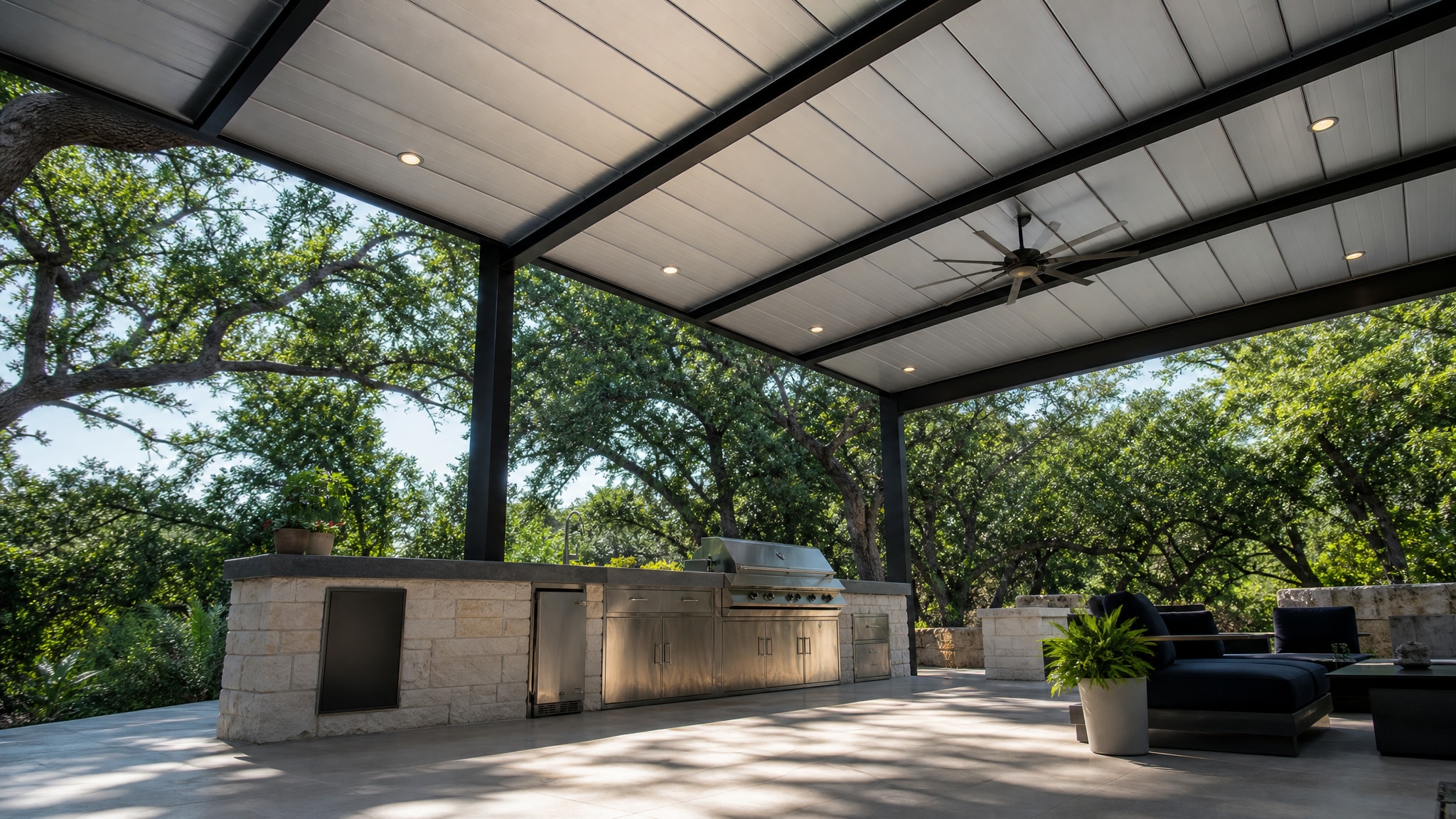
Choosing between an insulated patio cover and a non-insulated one is one of the biggest material decisions you'll make for your Central Texas home. The difference goes beyond upfront price. It affects how often you use the space, how hard your air conditioner works, and whether your outdoor kitchen stays functional on a July afternoon. TWT Outdoor Living has built custom outdoor living solutions in Austin since 2006, bringing over 70 years of combined construction and roofing experience to every project. That tenure has taught us the right choice depends on your site orientation, intended use, and tolerance for heat.
Why Insulation Matters for Central Texas Summers
Austin summers demand more than simple shade. Direct solar radiation creates surface temperatures that run far hotter than the ambient air reading. You need a roof system that actively manages thermal energy, not just blocks sunlight, especially if your patio attaches directly to your home's conditioned envelope.
Radiant Heat vs. Ambient Temperature
Insulated patio roof panels use a foam core sandwiched between finished metal skins to reduce heat transfer through the assembly. This thermal break keeps the underside of the roof from becoming a secondary heat source that radiates down onto people and furniture below. Non-insulated aluminum absorbs solar energy and re-radiates it efficiently, creating a microclimate underneath that can feel hotter than the surrounding yard even when the structure provides full shade.
Impact on Adjacent Interior Rooms
An uninsulated metal roof attached to your house pushes heat into the adjacent wall assembly and ceiling cavity. Your cooling system has to compensate, which raises energy use and cuts comfort in the rooms nearest the patio. Insulated covers create a buffer zone that protects your home's thermal envelope. That buffer matters most on west-facing exposures, which take the brunt of the afternoon sun all summer.
Performance Comparison: Insulated vs. Non-Insulated Aluminum
The experience under each cover type diverges once temperatures climb above ninety degrees. Knowing these differences helps you decide whether the added cost fits how you plan to use the space.
Temperature Differential Under the Cover
During peak summer heat, the underside of an insulated panel stays noticeably cooler than bare aluminum. That difference shows up directly in comfort: you can host a gathering or cook outdoors when a non-insulated structure would feel oppressive. The best patio cover materials pair reflectivity with thermal resistance to keep the space usable.
Noise Reduction and Weather Protection
Rain hitting a non-insulated metal roof makes real noise, enough to disrupt conversation underneath. The foam core in insulated panels dampens that sound, so Central Texas thunderstorms feel quieter under cover. Insulated covers are also structurally thicker than non-insulated alternatives, which means less wear and more resistance to weather damage, including the hail that shows up often in our region.
Durability and Structural Thickness
Insulated panels' extra thickness gives them more rigidity and span capability than single-skin aluminum. That lets you install with fewer visible support members, which helps both looks and long-term performance. Thicker panels also resist denting and warping better over decades of UV exposure and severe weather across Greater Austin.
Cost Analysis: Upfront Price vs. Long-Term Value
Budget matters, but judging cost by the invoice alone misses the full picture. You need to weigh it against the structure's whole lifespan. A non-insulated patio cover costs less at installation, but that savings can get eaten up by higher cooling bills and a patio you can't use during the hottest months.
Material and Installation Cost Differences
Insulated systems need specialized components and more labor to install, which raises the initial investment. Current Austin patio cover pricing reflects that premium, though the gap moves with span requirements, finish selections, and how complex the integration gets. Expect insulated options to cost meaningfully more than basic aluminum, but the exact difference depends on your design and site conditions.
Energy Savings and HVAC Efficiency
Lower cooling loads on adjacent living spaces add up to real utility savings over years of ownership. Those savings help justify the higher upfront cost, especially on patios attached to south- or west-facing walls, where solar gain hits hardest. The exact number depends on your home's insulation, window efficiency, and HVAC age, but the direction of the benefit holds, and you can confirm it yourself by tracking your electricity use before and after installation.
Best Use Cases for Each Patio Cover Type
Neither option wins across the board. Each serves a different purpose depending on how you use the space and what your budget allows. Matching the material to the application means you only pay for the performance you actually need.
When to Choose Insulated Roof Panels
Attached patios that function as an extension of your indoor living area benefit most from insulation, because comfort is what drives how often you use the space. Outdoor kitchens with electronics, ceiling fans, and dining furniture need the thermal management insulated panels provide to stay usable during the day. If you plan to add climate control or spend real time out there on summer afternoons, the performance is worth the extra cost.
When Non-Insulated Covers Make Sense
Detached shade structures over pools, hot tubs, or storage areas often do fine without insulation, since people aren't under them constantly and heat sensitivity is lower. Budget-conscious projects aimed mainly at UV protection, not thermal comfort, can get there with non-insulated aluminum at a lower price. These setups tolerate higher underside temperatures because people are usually in the water, passing through, or out there during the cooler morning and evening hours.
A non-insulated cover will not make a comfortable outdoor room during peak summer heat. No amount of fan circulation overcomes its thermal limits in direct sun.
Aluminum Patio Cover vs. Wood in Texas Climates
Material choice involves trade-offs beyond insulation. Wood has natural insulating properties aluminum can't match on its own, but those benefits come with maintenance demands many Austin homeowners find unsustainable in our humid climate.
Aluminum reflects solar radiation well and needs almost no upkeep beyond occasional cleaning. Wood absorbs moisture, invites insect damage, and needs regular sealing or painting to hold up in Central Texas humidity. Wood's thermal mass does moderate temperature somewhat, but the lifecycle cost and labor to maintain it usually outweigh that edge, since modern insulated aluminum systems deliver comparable or better thermal performance without the upkeep.
Integrating Your Patio Cover with Outdoor Living Systems
Your patio cover is one piece of a larger outdoor living system, and it performs better when designed alongside the rest of that system from the start. Planning these elements together avoids costly retrofits later.
Motorized Screens and Climate Control
As an authorized MagnaTrack dealer, TWT builds motorized screens directly into patio cover designs to improve climate control and usability. These screens turn an insulated patio into a semi-conditioned space: they block insects, cut wind, and hold onto the cooled air from overhead fans or misting systems. Learn more about motorized screen integration to see how this technology extends your outdoor season beyond what a roof alone can do.
Design-Build Considerations for Austin Homes
Unified design-build planning keeps structure, permitting, and aesthetics working together across every outdoor living element. Juggling separate contractors for roofing, screening, electrical, and masonry invites coordination problems that often turn into change orders, delays, and compromised results. One accountable team from concept through completion protects your investment and keeps communication simple.
If you're still weighing structure types before settling on insulation, comparing a patio cover versus pergola will clarify which form factor suits your site and lifestyle.
Making the Right Choice for Your Austin Property
Your decision should reflect your property, not a generic recommendation pulled from a national source. Orientation matters a lot: a north-facing patio gets minimal direct sun and may do fine without insulation, while a west-facing exposure needs maximum thermal protection. Intended use matters too, since a space built for daytime entertaining has different needs than one used mainly for evening relaxation.
Budget shapes every project, but judging cost by installation price alone misses the real value equation. Think about how often you'll use the space, what you'll do there, and how that plays against Austin's climate through the year. Review custom patio cover options to see how different configurations fit different needs and budgets.
For detailed cost context specific to our market, check current Austin patio cover pricing before you schedule a consultation. A site evaluation matters because photos and descriptions can't capture the microclimate, the structural attachment points, and the drainage details that determine which solution actually fits your property.
Frequently Asked Questions
How much does a 20x20 insulated patio cover cost in Austin?
Pricing for a 400-square-foot insulated patio cover varies significantly based on span requirements, finish selections, electrical integration, and site accessibility. Insulated systems carry a premium over non-insulated aluminum due to specialized materials and installation labor. Schedule a site evaluation to receive an accurate quote tailored to your specific design parameters and structural conditions.
Should you insulate an open porch ceiling if you already have a solid roof?
Adding insulation beneath an existing solid roof can improve thermal performance if the current assembly lacks a thermal break and transfers heat into adjacent living spaces. However, retrofitting insulation into an existing structure involves demolition, reframing, and finishing work that may approach the cost of replacement. A professional assessment determines whether adding insulation or replacing the roof system delivers better value for your specific situation.
What is the typical cost difference between insulated and non-insulated aluminum patio covers?
Insulated patio covers typically cost more than non-insulated alternatives due to foam-core panel materials, specialized fasteners, and additional installation labor. The exact differential depends on span, finish, and integration complexity rather than following a fixed percentage markup. Request itemized quotes for both options to compare true costs against your intended use and expected frequency of occupancy.
Does an insulated patio cover reduce home energy bills in Central Texas?
Insulated covers reduce solar heat gain on adjacent walls and ceilings, lowering cooling loads for interior rooms nearest the patio. Actual savings depend on your home's existing insulation, window efficiency, HVAC age, and the patio's orientation relative to prevailing sun exposure. Monitor your electricity usage before and after installation to quantify the specific impact on your household's energy consumption.