
Motorized Patio Screens Austin: MagnaTrack Installation
October 13, 2026
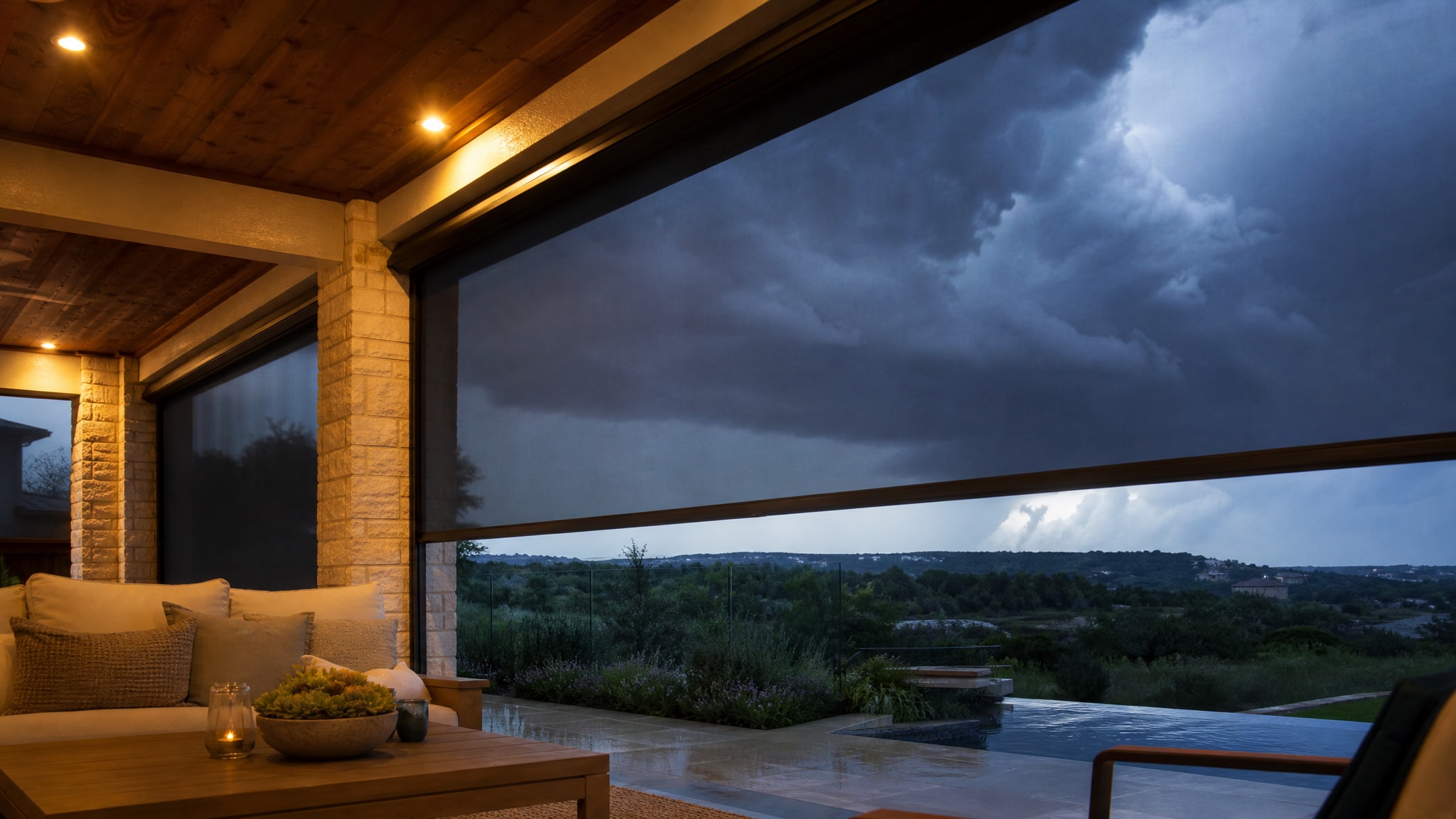
Austin summers demand more than shade to make outdoor living work. Heat, sudden thunderstorms, and persistent insects can turn an uncovered patio into dead space within minutes. Motorized patio screens in Austin fix that. They turn an open structure into a climate-controlled extension of your home at the touch of a button. Manual alternatives need physical effort and a bit of foresight; automated systems respond instantly to changing conditions, so your day doesn't get interrupted.
TWT Outdoor Living is an authorized MagnaTrack dealer, and our installers are factory-trained, which keeps every job warranty-valid. That matters because motorized systems are mechanically complex, and general contractors often lack the specific expertise to install them correctly. You bring the vision, we handle everything else, from initial concept through engineering, permitting, and final installation.
Why Austin Homeowners Choose Motorized Over Manual Screens
Manual crank screens work fine in mild climates. Central Texas weather rarely cooperates with slow responses. When a microburst rolls across the hill country, or the afternoon sun shifts without warning, you need protection that deploys in seconds, not minutes. Motorized systems close the gap between wanting comfort and actually getting it, which is what makes an outdoor space usable year-round.
Adapting to Central Texas Weather Extremes
The gap between pleasant and unbearable outdoors in Austin can close faster than you can walk to a wall-mounted crank. A motorized retractable screen on a Texas patio closes that gap instead, letting you adjust instantly from your chair or a smartphone app. That responsiveness is why people actually use the space during shoulder seasons and storm-prone months, instead of retreating indoors at the first sign of wind or glare.
Your patio becomes a true extension of your living area once the environmental controls take zero physical effort. For homeowners who value their time, that convenience alone justifies the upgrade.
Seamless Integration with Existing Patio Covers
Retrofit a screen onto an existing structure and you often end up with visible tracks, an exposed motor, and an afterthought look that undercuts the architecture. TWT builds motorized systems directly into custom patio covers during the design phase instead, hiding hardware inside beams and rafters for a built-in appearance. That keeps sightlines clean, and it means the structural members are sized from the start to carry motor weight and track tension without modification later.
New construction benefits even more from this approach, since engineers can account for screen loads from day one. Whether you're adding to an existing cover or planning new construction, the result looks intentional, not bolted on.
The MagnaTrack Advantage for Texas Patios
Not all motorized screens hold up under Central Texas conditions. MagnaTrack's patented zipper retention system locks fabric inside the tracks, which is what keeps it from billowing or tearing loose during the high winds Central Texas sees regularly. Standard spline-based systems fail once gusts pass a moderate threshold, leaving homeowners with torn fabric right when they need protection most.
Patented Track Technology and Wind Resistance
The zipper-style edge retention keeps fabric locked in place laterally, spreading wind load across the full length of the track instead of concentrating stress at the corners. That mechanical advantage lets MagnaTrack screens hold up to conditions that would wreck a conventional retractable system, which matters during the spring and fall storm seasons that define Austin's transitional weather. A weatherproof patio screen has to survive those extremes without constant repair.
You get the peace of mind of knowing the system won't fail at the exact moment it's supposed to protect you. That durability comes from engineering choices built for demanding environments, not generic residential hardware.
Fabric Options for Sun and Insect Control
Mesh density decides both visibility and protection level, and Austin's pest seasons call for a deliberate choice. A tighter weave blocks no-see-ums and mosquitoes while still letting air through; solar fabrics trade some insect exclusion for better UV rejection and heat reduction. An authorized dealer can match the fabric to your site's orientation, the vegetation around it, and how you actually plan to use the space, rather than defaulting to one fabric for every job.
The patio enclosure screens Austin homeowners pick should balance all of that, since it varies by neighborhood and lot. Get the balance right and the space does its job without giving up anything else.
Smart Controls and Automation Features
Modern motorized outdoor screens come with control systems well beyond a simple remote. These features turn a passive barrier into something that protects itself and adapts to conditions without anyone touching it. The technology answers real Texas weather problems, not novelty for its own sake.
Remote Operation and App Connectivity
Controlling screens from your phone means you adjust coverage without leaving your seat or walking to a wall switch. That's useful when you're hosting guests, managing several openings at once, or want to check the screens from inside before heading out. Tie the system into a broader smart home setup and you can schedule positions or build scenes that coordinate screens with lighting, audio, and other outdoor features.
You stay in control of the space no matter where you physically are. The interface stays simple, so the added functionality doesn't become a hassle to use day to day.
Wind Sensors and Safety Auto-Retract
An unexpected gust can damage a deployed screen if no one's watching. Automated wind sensors catch dangerous thresholds and retract the fabric before damage happens, which protects the system while you're out or asleep. This safety feature works independently of the manual controls, so protection continues even when you're not home.
Auto-retract removes the worry of leaving screens down through an uncertain forecast. The system defends itself against the exact conditions it was built to manage, which extends its life and cuts down on maintenance.
TWT as Your Authorized MagnaTrack Dealer
Authorized dealers get direct manufacturer support and specialized training that a general handyman can't offer on a complex motorized system. That credential means verified competency in installation, electrical integration, and troubleshooting specific to MagnaTrack products. Go with an unauthorized installer and you risk a voided warranty, improper operation, and little recourse if something goes wrong.
Factory-Trained Installation Standards
Factory training covers what a product manual can't: track alignment tolerances, motor calibration, and fabric tensioning methods that affect how the system performs years down the line. TWT technicians retrain regularly to stay current with product updates and installation practices. Precise installation is what prevents premature wear, operational noise, and the tracking problems that show up on poorly executed jobs.
A system performs as engineered only when it's installed to the manufacturer's specifications. Cut corners on installation and you lose the reliability that's the whole reason to choose MagnaTrack over something cheaper.
Warranty Support and Local Accountability
TWT brings over 70 years of combined construction and roofing experience to every motorized screen integration project. That depth shows up in proper structural assessment, code compliance, and coordination with other trades when screens become part of a larger renovation. As a family-owned business operating since 2006, our accountability doesn't end when the job does.
Warranty claims move smoothly through an authorized channel instead of getting stuck between the manufacturer and a third-party installer. And because we're local, service calls don't depend on a distant regional rep who's never seen your installation.
Understanding Motorized Outdoor Screens Cost
Motorized outdoor screens cost varies with opening dimensions, motor specifications, fabric choice, and how much control automation you want. A larger opening needs a heavier-duty motor and reinforced tracks, and premium solar fabrics cost more than standard insect mesh. Custom shapes, non-standard colors, and advanced automation add real cost, because they're real differences in the hardware, not arbitrary pricing tiers.
Weigh that investment against what it buys: more usable living space across Austin's long warm season. A screened patio that's comfortable for eight months a year delivers a lot more use than an open structure that's tolerable for three or four. The cost per use drops fast once the space becomes a regular extension of your home instead of an occasional luxury.
Think about the total project scope rather than pricing each piece in isolation. Adding screens during initial patio cover construction usually costs less than retrofitting later, and pairing the project with other upgrades, like flooring or lighting, creates efficiencies that bring the overall cost down.
Design-Build Process for Screen Enclosures
A single team handling the whole project closes the coordination gaps between designers, engineers, and installers that cause delays and cost overruns elsewhere. TWT manages the entire workflow internally, so decisions made at the design stage carry through permitting and construction without getting lost. That prevents the finger-pointing that happens when several contractors share responsibility for one interconnected system.
Site Evaluation and Custom Measurements
Every installation starts with a detailed site assessment: structural capacity, electrical access, drainage, and sun exposure angles. Precise measurements account for seasonal thermal expansion, settling, and how the screen ties into the existing architecture. That thoroughness is what prevents field changes later that compromise the look or the performance.
You get a proposal based on actual site conditions, not assumptions that shift once work starts. Diligence at this stage is what protects both budget and timeline, because it catches constraints before fabrication begins.
Engineering and Permitting Management
Structural calculations confirm the existing or proposed framing can carry motorized screen loads under maximum wind conditions. Permit applications include stamped drawings and product specifications that satisfy municipal requirements, so you don't have to chase paperwork yourself. Keeping engineering in-house means structural integrity and architectural intent get handled together, not as separate problems.
Code compliance gets addressed up front instead of during an inspection. Your project moves forward predictably because the regulatory questions were answered during planning.
Maximizing Your Outdoor Living Investment
Motorized screens do the most when they're part of a broader outdoor living plan, not bolted on as an afterthought. Coordinate screen placement with cooking zones, dining areas, and lounge spaces, and you create distinct zones that serve different purposes through the day. An outdoor kitchen builder knows how screening affects ventilation, appliance placement, and the way people move through the space.
Pool cabanas benefit the same way from early screening integration, which adds privacy and insect protection without closing the space in. See our guide on pool cabana designs for how enclosed and semi-enclosed structures extend how much you can use a pool area. Each element should reinforce the others rather than compete for attention.
Treat screens as part of one design-build plan instead of a piecemeal upgrade, and the individual pieces end up adding more value together than any one of them would alone.
Ready to see how motorized screens could change your outdoor space? Start your project with a consultation built around your property's specific opportunities and constraints.
Frequently Asked Questions
What is the average cost of a motorized patio screen?
Costs vary significantly based on opening size, motor type, fabric choice, and automation features rather than following a standard price point. Larger openings require heavier motors and reinforced tracks, while premium solar fabrics cost more than basic insect mesh. Budget discussions should focus on total project scope and the value of extended seasonal usability rather than isolated component pricing.
Are motorized patio screens worth it?
They deliver substantial value for Austin homeowners who want to use outdoor spaces during unpredictable weather without manual effort. The ability to instantly deploy protection during storms or intense heat extends usable months from three or four to eight or more annually. Convenience and responsiveness justify the investment when compared to the limited utility of unprotected patios in Central Texas climate.
What are the best motorized retractable patio screens?
MagnaTrack systems excel in Austin due to patented zipper retention that prevents fabric blowouts during high winds common in Central Texas. The track technology distributes wind load across the entire length rather than concentrating stress at corners like standard spline systems. Authorized dealer installation ensures these mechanical advantages translate to real-world performance and valid warranty coverage.
How do wind sensors protect motorized screens during storms?
Automated sensors detect dangerous wind thresholds and retract fabric before damage occurs, operating independently of manual controls. This feature provides continuous protection during unattended periods or sudden weather changes when no one is present to intervene. The auto-retract function extends system lifespan by preventing the exact failures that occur when screens remain deployed during unexpected gusts.