
Patio Cover Vs Pergola: Best Choice for Austin Yards
October 16, 2026
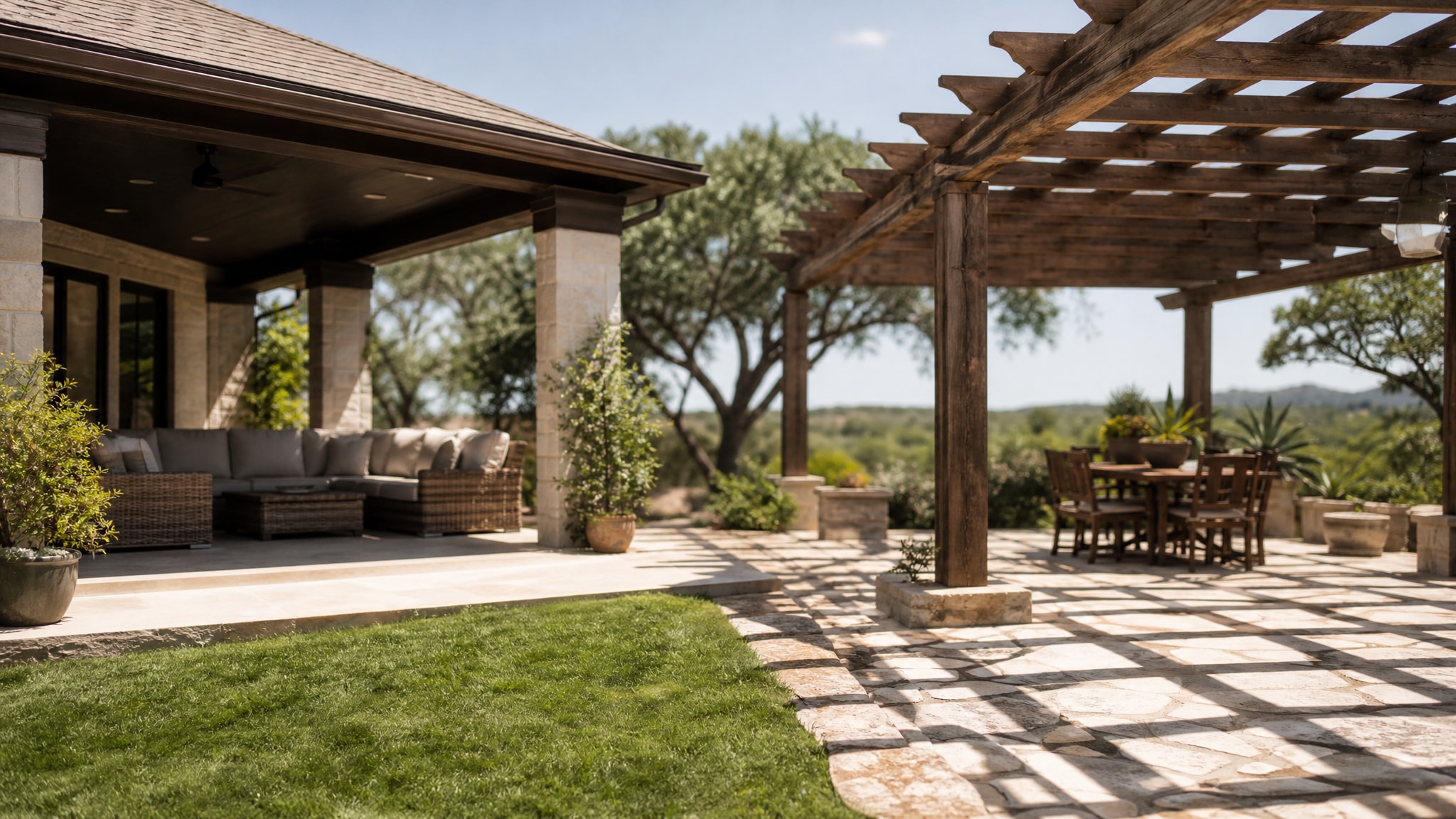
Choosing between a patio cover and a pergola in Austin comes down to how each structure holds up under Central Texas sun. It's rarely just about looks when afternoon temperatures regularly climb above ninety degrees and storms roll across the hill country without warning. You need a space that works year-round, not one that looks beautiful in spring and sits empty by July.
TWT Outdoor Living has helped homeowners make this exact call for nearly two decades, building structures engineered for our regional climate. We handle every phase from concept through final construction, so you get one point of accountability instead of juggling separate designers, engineers and contractors. You bring the vision, we handle everything else. Here's how the two options actually differ when your goal is a space you'll use, not just admire.
Defining the Difference: Solid Patio Cover vs Open Pergola
The core distinction is overhead protection. A solid patio cover gives you complete shelter from sun and rain with a fully enclosed roof that matches your existing home architecture. An open pergola uses spaced beams or slats to create partial shade and visual interest without blocking weather entirely.
That structural difference shapes everything about daily usability here. Solid covers create true outdoor rooms where furniture stays dry in a sudden downpour and temperatures stay manageable even during peak afternoon heat. Open pergolas offer dappled light and architectural charm, but they leave you exposed to UV and to passing showers that can end a gathering fast.
Base your choice on function, not appearance alone. If you plan to host dinner parties, work remotely outdoors or protect furnishings from weather damage, full protection from a solid roof isn't optional. Pergolas work better as garden accents, pathway markers or transitional elements between covered zones and open yard space, where some exposure is fine.
Texas Heat Performance: Best Shade Structure for Sun Exposure
Thermal comfort is what separates a usable outdoor space from a decorative one during our long summer. Solid patio covers consistently outperform open pergolas for daily use in Central Texas because they block direct solar gain, which brings ambient temperatures underneath down well below what a slatted roof allows. The gap widens between noon and six o'clock, when the sun angle drives heat straight through open beam configurations.
Temperature Management Under Solid Roofs
A properly built solid roof reflects or absorbs solar radiation before it reaches the living area below, keeping surface temperatures on decking and furniture well lower than an exposed alternative. That thermal barrier means ceiling fans actually move cooler air instead of just circulating hot air trapped beneath open slats. Guests notice the difference the moment they step from full sun into real shade.
Insulated roof panels add a second layer of protection by stopping heat transfer through the roofing material itself. An uninsulated metal roof can radiate absorbed heat downward even while blocking direct sun, which eats into the cooling benefit. TWT Outdoor Living specifies materials and assembly methods that address this, because we build for August afternoons, not just mild spring evenings.
Limitations of Open Beams in Peak Summer
Open pergolas can't deliver real thermal relief during the hottest months, no matter the slat spacing or orientation. Austin homeowners frequently upgrade from open pergolas to solid covers, or add retractable canopies, after their first full summer, citing the simple fact that they couldn't use the space during peak afternoon hours. The dappled shade that photographs beautifully in April does little against a hundred-degree heat index in July.
Retractable fabric canopies help, but they bring maintenance headaches and mechanical failure points a solid roof avoids. Fabric breaks down under constant UV exposure and needs replacing every few years in our sun. Motorized retraction systems add cost and complexity, and the structure is still vulnerable to wind damage during the very storms when you'd want coverage most.
Material Durability and Maintenance in Central Texas
Our climate attacks building materials from several directions at once, and wear here outpaces the national average. Intense UV breaks down wood fibers and fades finishes. Sudden hail dents metal and cracks tile. High humidity promotes rot and mold in porous materials. The materials you choose, and how well they resist these specific local threats, decide whether your investment lasts decades or needs premature replacement.
Weather Resistance for Wood and Aluminum
Cedar and redwood look great but demand a strict maintenance schedule to survive Austin summers without deteriorating. Staining or sealing needs to happen every eighteen to twenty-four months to prevent graying, cracking and moisture intrusion that leads to structural decay. Powder-coated aluminum skips that recurring labor entirely while standing up better to hail impact and UV than wood ever will.
Vinyl resists moisture and insects, but it can turn brittle under prolonged heat and may warp through extreme temperature swings. Composite materials blend wood fibers with plastic binders to cut down on maintenance while keeping some natural texture, though they still need periodic cleaning to prevent mold staining in our humidity. Every material choice is a tradeoff between upfront look, long-term durability and how much upkeep you're willing to commit to.
Long-Term Upkeep Requirements
Wood structures need annual inspection for fastener corrosion, joint separation and finish failure that compromises weather protection. Skip that cycle and deterioration doesn't creep, it accelerates, turning minor touch-ups into major repairs within a few seasons. Aluminum and steel systems need only occasional washing to clear pollen and dust that can trap moisture against connection points.
How much maintenance you're willing to do, or pay for, should shape material selection as much as budget does. Being honest about that upfront saves you from discovering that a beautiful cedar pergola eats more weekend hours than you bargained for. Low-maintenance materials cost more at the outset but often come out cheaper over fifteen years once you add up labor and refinishing.
Pergola vs Covered Patio Cost and Investment Value
Budget conversations need to account for the whole project, not just price per square foot of roof. Foundation requirements, electrical integration, material grade and site accessibility all move final pricing in ways a generic estimate can't capture. For numbers specific to Austin projects, a comprehensive patio cover cost breakdown gives realistic ranges based on actual completed work.
Factors Influencing Price Per Square Foot
Engineering for wind uplift drives structural costs, and the gap between open and solid configurations is real. Texas wind load requirements and uplift forces exceed standard national building codes, so a solid roof that catches wind like a sail needs heavier framing and deeper footings. Open pergolas let wind pass through, so they need less structural support, which lowers material and labor costs.
Electrical integration for lighting, fans and entertainment adds real cost regardless of roof type, but it delivers far more utility under a solid cover, where wiring stays protected from weather. Running conduit through open beams exposes it to UV damage and moisture that shortens its life. Budget for these functional upgrades: a bare structure without lighting or air movement doesn't do much in our climate.
ROI and Home Value Considerations
Fully covered outdoor spaces tend to deliver a better functional return in hot climates, because they extend usable square footage year-round instead of just seasonally. Appraisers increasingly count conditioned or semi-conditioned outdoor areas as real living space when they're properly permitted and tied into the main house architecture. Open pergolas add curb appeal, but they rarely add value in proportion to their cost, since buyers understand the seasonal limitation going in.
Think about how many days a year you'll actually use the space. A solid cover used three hundred days a year costs less per use than a pergola usable only a hundred fifty days, even with a higher price tag going in. That utilization math matters more than raw construction cost when you're weighing true value for how your household actually lives.
Enhancing Functionality with Motorized Screens and Add-Ons
Enclosing a covered space turns it from simple shelter into a versatile room that adapts to changing conditions through the day. TWT Outdoor Living integrates MagnaTrack motorized screens into both patio covers and pergolas, building spaces that adjust to Austin's shifting weather and insect activity as the day goes on. These screens deploy instantly when afternoon wind picks up or mosquitoes show up at dusk, then retract fully to keep the open-air feel when conditions allow.
Motorized screen integration is the single most impactful upgrade for bridging indoor comfort with outdoor atmosphere. Learn more about motorized screen integration, including track options, mesh densities and automation features that adapt to your site's specific challenges. Wind sensors lower screens automatically during gusts to prevent damage, and programmable schedules handle routine deployment without you lifting a finger.
An open pergola can't match that level of enclosure even with screens added, because gaps between slats let insects and wind-driven rain in from above. Pergola owners live with a permanent compromise on bug protection and weather sealing that solid cover owners simply don't face. Knowing that going in saves you from investing in a structure that can't meet your needs, no matter what you bolt on afterward.
Custom Design Options for Austin Yards and Architecture
What separates real design-build work from a generic kit installation is how well the new structure blends with your existing home. Matching shingle profiles, fascia details, paint colors and trim styles makes your new structure look original to the property instead of tacked on. That cohesion protects resale value and creates the unified indoor-outdoor flow that defines good Texas outdoor living.
Matching Rooflines and Exterior Finishes
Getting the roof pitch right avoids awkward transitions that collect debris and create leak paths at connection points. TWT Outdoor Living engineers attachment systems that maintain proper drainage while lining up visually with your home's existing roofline. Custom patio cover designs show how thoughtful detailing makes new construction look intentional rather than appended.
Matching finish goes beyond color to texture and sheen, since new paint ages differently than weathered original finishes. That contrast only gets worse with time unless you plan for it from the start. Good designers account for how finishes will weather together, not just how the job looks on installation day.
Integrating Outdoor Kitchens and Living Areas
Cooking and dining zones need coordinated gas, water, electrical and ventilation routing, and that shapes the whole structure's layout. Thoughtful outdoor kitchen planning positions appliances relative to prevailing wind and sun angle, so meal prep and service stay comfortable. Put the grill downwind and smoke won't blow back into seating, while the right shading keeps prep surfaces cool enough to touch.
Storage and workspace need to match how people actually cook, not catalog ideals. Too little counter space or a poorly placed sink means constant trips back indoors, which defeats the point of building an outdoor kitchen in the first place. We watch how clients actually entertain and design around that, not around an aspirational version of it.
Making the Final Decision for Your Outdoor Space
No single structure suits every property, budget or lifestyle equally. An open pergola doesn't give you adequate weather protection for daily outdoor living in Central Texas, no matter how nicely it frames the garden view. Accept that limitation upfront, and you avoid paying for a retrofit later after discovering the space sits empty during the exact months you meant to enjoy it.
Sun orientation, prevailing wind, drainage and how close you are to neighboring properties all shape which option performs best in your yard. A professional evaluation catches constraints you'd never spot in a photo or floor plan, the kind that make one option clearly the right call for your situation. Schedule a free design consultation with TWT Outdoor Living, and get recommendations built on nearly twenty years of Austin outdoor living experience.
Frequently Asked Questions
Can I convert my existing pergola to a solid patio cover later?
Converting an open pergola to a solid roof typically requires replacing the entire overhead structure because existing beams lack the load-bearing capacity and attachment points needed for solid roofing materials. Retrofitting usually costs nearly as much as new construction while delivering inferior engineering compared to purpose-built solid covers. Most homeowners find starting fresh delivers better results at similar total investment.
How much does a 20x20 patio cover cost in Austin?
A 400-square-foot solid patio cover in Austin typically ranges from $18,000 to $35,000 depending on materials, foundation requirements, electrical integration and site accessibility. Premium finishes, insulated roof panels and motorized screens push costs toward the upper end while basic aluminum structures with minimal utilities fall at the lower range. Site-specific factors like slope, soil conditions and tie-in complexity create significant variation within this span.
What is replacing traditional open pergolas in Texas?
Solid patio covers with integrated motorized screens are increasingly replacing open pergolas as homeowners prioritize year-round usability over seasonal aesthetics. Retractable canopy systems also gain popularity for existing pergolas where full conversion proves structurally impractical or financially prohibitive. Both solutions address the core complaint that open beams fail to provide adequate relief during peak Texas summer heat.
Does a solid patio cover require permits in Austin?
Yes, solid patio covers require building permits in Austin and most surrounding municipalities because they constitute permanent structural additions subject to wind load and safety code compliance. Permit fees and approval timelines vary by jurisdiction but typically add two to six weeks to project schedules. Working with licensed design-build firms streamlines this process since they handle engineering stamps, applications and inspections as part of their service.