
Best Patio Cover Material for Texas Heat: Buyer's Guide
November 3, 2026
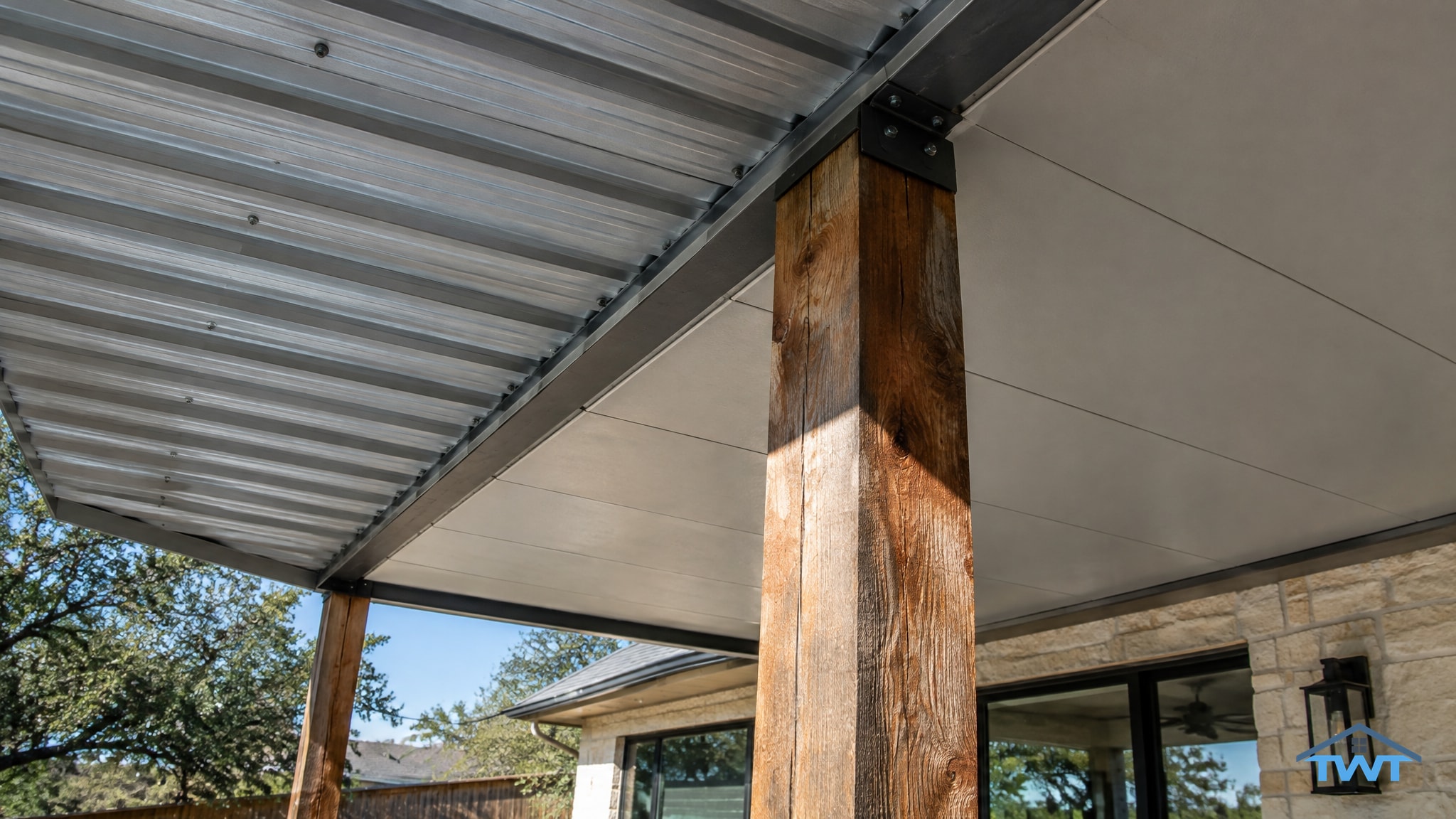
Pick the wrong roof for an Austin patio and you will know by the second summer. It will be too hot to sit under, faded, or stained, or it will be waiting on a repair after a spring hailstorm.
The best patio cover material for Texas heat is not one product. It depends on which way your yard faces, how much hail your block sees, and how much upkeep you will actually do. This guide ranks the common materials against those three things.
How Does Texas Heat Change the Best Patio Cover Material?
Central Texas puts four stresses on a patio roof at once. Summer UV is intense and lasts for months. Spring storms bring hail. The air stays humid enough that wood rarely dries out fully. And any solid roof traps heat underneath it.
Most national "best materials" lists treat these as one problem. They are four, and each material handles them differently.
Your yard changes the answer too: a west-facing patio used on summer afternoons asks far more of a roof than a shaded north-side seating area, so the same material can be a smart choice in one yard and a poor one in the next.
How We Ranked Each Material for Central Texas
Every ranking in this guide comes from five tests:
- UV. Does the material keep its color and strength under years of direct sun?
- Hail. Does it shed impact, and what does damage look like afterward?
- Humidity. Does it rot, corrode, sweat or swell in damp air?
- Upkeep. What does the owner actually do each season?
- Cost versus longevity. What does it cost up front, and how long before it needs replacing?
The material is only part of the result. Orientation, ventilation and insulation shape how a patio feels as much as the roof surface does.
A well-vented, insulated roof on a west wall can beat a "better" material installed without a plan for heat.
Durable Patio Roof Materials Compared for Central Texas
The table ranks six options by overall fit for Central Texas with low upkeep, best first. Ratings are qualitative, and you will find real figures in the cost section below.
| Rank | Material | UV | Hail | Humidity | Upkeep | Upfront cost | Longevity outlook |
|---|---|---|---|---|---|---|---|
| 1 | Insulated metal panels | Strong | Strong | Strong | Low | High | Long |
| 2 | Aluminum | Strong | Moderate to strong, by gauge | Strong | Low | Moderate | Long |
| 3 | Coated steel | Strong while coating holds | Strong | Moderate; scratches can rust | Low to moderate | Moderate | Long if coating is kept up |
| 4 | Multiwall polycarbonate | Good with UV coating | Moderate; large stones can crack it | Strong; does not rot | Low to moderate | Low to moderate | Moderate |
| 5 | Cedar or pressure-treated wood | Weak without finish | Depends on roof covering | Weak | High | Low to moderate | Moderate, with upkeep |
| 6 | Fiberglass | Weak; yellows and turns brittle | Weak | Strong | Moderate | Low | Short |
Ratings assume proper installation and, for coated metals, a finish kept in good condition.
Aluminum vs. Wood Patio Covers in Texas: Which Fits Your Yard?
This is the choice most Austin homeowners face first, and it is a trade-off, not a contest. Aluminum gives you low upkeep and good humidity tolerance, but needs a plan for heat. Wood gives you warmth and a natural look, but puts you on a finish schedule for as long as you own it.
The hail result does not depend on the frame. It depends on the roof covering you put over it, whether the frame underneath is aluminum or wood.
Where Aluminum Earns Its Place in Central Texas
Aluminum does not rot, and it does not rust the way steel can. Humid mornings and wet springs do little to it, and routine care is mostly a rinse.
Its weak spot is heat. A solid aluminum roof absorbs sun and passes warmth to the space below.
Picture a west-facing patio under a solid, uninsulated metal roof. It can stay uncomfortably warm well into the evening, because the roof holds and radiates heat. Insulation, a reflective underside or a screen fixes that. Our breakdown of insulated versus non-insulated patio covers shows where each makes sense.
If you would rather leave the roof alone, motorized patio screens for afternoon shade cut direct sun without changing the roof material. TWT is an authorized MagnaTrack dealer and integrates these screens into covered patios.
What Wood Asks of You Over Time
Wood looks right in a Hill Country yard, and cedar and pressure-treated lumber both build a handsome structure. The price is a recurring job: sand, seal or stain, and repeat as UV breaks the finish down.
Skip a cycle and the damage compounds. Gray, checked surfaces come first, then splits, then rot where water sits.
Wood is not the right choice if you want a cover you never think about. It suits owners who like the look enough to keep up with the finish.
UV and Hail: Which Patio Cover Materials Hold Up Best?
Sun and storms attack a roof in different ways. UV wears a material down slowly, while hail tests it in minutes, and you should check both before you commit to a material.
UV-Resistant Patio Cover Options
Some materials need a protective layer to keep their color and strength, and some simply fail without one.
- Unprotected polycarbonate yellows and loses impact strength. A UV-coated sheet slows that down, which is why the coating matters more than the panel.
- Fiberglass yellows and turns brittle. It is the weakest performer here.
- Painted or coated metal fades over time. The color shifts first. The metal underneath stays sound as long as the coating does.
- Wood grays and cracks without a finish, and it needs a fresh one on a schedule.
Aluminum and insulated metal panels hold up best because the sun does little to the metal itself. West-facing exposure takes the hardest afternoon hit, so that wall is where a weak UV material shows its age first.
Hail-Resistant Patio Covers: What Holds Up in Spring Storms
Gauge and thickness matter more than the material name. A heavy-gauge metal roof and a thin one are different products, even when both are called aluminum or steel.
Here is how the materials behave:
- Metal usually dents rather than cracks. Heavier gauges take hits better.
- Wood slats can split under a direct strike.
- Solid polycarbonate is among the most impact-resistant translucent options.
- Multiwall polycarbonate can crack under large stones.
- Fabric canopies and open slats offer little hail protection.
After a storm, you need to know which damage affects performance. Dents in heavier-gauge metal may be cosmetic. Cracks in fiberglass or thin polycarbonate usually mean replacing the panel.
For local hail frequency, check the NOAA Storm Events Database for your county rather than guessing. If your main roof faces the same exposure, our notes on residential roofing in Austin cover that side.
How Much Maintenance Does Humidity Add for Each Material?
Maintenance is what you do each season, not an exhaustive task list. Humidity is a separate question, and it adds more work to some materials than others.
Low-Maintenance Patio Cover Options
Here is what a typical Central Texas owner does each season for each material:
- Aluminum and insulated panels: rinse them and check the fasteners.
- Coated steel: touch up scratches and cut edges before moisture reaches bare metal.
- Polycarbonate: clean it gently with mild soap and a soft cloth, because harsh scrubbing wears off the UV coating.
- Wood: refinish on a schedule. If you want the look without all of that, UV-stabilized composite trim gives you a wood appearance with far less work.
Aluminum and insulated panels are the least demanding. Wood is the most.
How Humidity Affects Wood, Metal and Polycarbonate
Wood stays damp longer after rain. That invites rot, mildew and termites, especially where posts meet the slab and where water pools on horizontal members.
Metal can sweat on humid mornings. Condensation forms on the underside of a bare metal roof, then drips. Insulation or ventilation prevents it, and that is one reason insulated panels earn their place.
Keep aluminum away from copper-treated lumber. The chemicals in the wood can corrode the metal where the two touch, so use separation hardware or a different framing material.
Polycarbonate does not rot. It does expand in heat, so it needs room to move at the fasteners and edges, and a tight, rigid install is how it ends up cracked.
Steel is the one that can corrode, but only where the coating has been scratched. That is why touch-ups matter.
Cost vs. Longevity: Is the Cheapest Patio Cover Really the Best Value?
Not usually. The lowest price on a quote is rarely the lowest cost over ten or twenty years of owning the patio, because recurring finish work on wood and early replacement of fiberglass both add up, and installation quality shapes how long any of them lasts.
Here is how the upfront price compares with what follows:
- Fiberglass is cheap to buy and tends to be replaced early.
- Wood costs less up front than metal, but you pay again every finish cycle.
- Polycarbonate sits in the middle on both price and lifespan.
- Aluminum and coated steel cost more at the start and ask for little afterward.
- Insulated panels cost the most up front.
Insulated panels earn that premium in a west-facing space you use through the afternoon, where cooler air under the roof changes whether you sit out there at all. For a shaded north-side patio, you may not need them.
You will find the numbers in our guide to current Austin patio cover pricing. Use them to compare the upfront price with the upkeep each material brings.
How Do You Choose the Right Material for Your Yard?
Work through four steps, in this order. They mirror how TWT runs every project.
- Discover. Walk the yard at 4 p.m. in summer. Note which walls take direct sun, and check storm history for your area.
- Imagine. Decide how you will use the space and how much upkeep you will accept. Be honest about the finish schedule.
- Visualize. See your shortlisted materials in 3D on your own house, so color, slope and shade are no surprise.
- Engineer. Size the structure and handle permits with one accountable team, so roof covering, frame and permit questions never fall between contractors.
If you are still deciding between a solid roof and an open frame, read our take on patio cover or pergola for Austin yards first. An open frame changes how much the roof material matters.
TWT Outdoor Living is a family-owned design-build company in Austin, founded in 2006, with over 70 years of combined construction and roofing experience on the team. We take a project from concept through 3D visualization, engineering, permitting and build. You can see what we build at TWT patio covers and extensions.
When you are ready, start a patio cover project with us. It begins as a site review of your sun exposure, hail risk and structure, before any material is chosen. It is not a sales call.
You bring the vision, we handle everything else.
Frequently asked questions
What is the best patio cover material for Texas heat?
For most Central Texas yards, insulated metal panels or aluminum come out on top. They handle UV and humidity well and need only a seasonal rinse and fastener check. The right pick still depends on sun exposure and hail risk, and a west-facing patio benefits most from insulation.
Is aluminum or wood better for a patio cover in Austin?
Aluminum suits you if you want low upkeep, because it does not rot or rust in humid air. Wood suits you if you want a natural look and will keep up with sealing or staining. Hail performance depends on the roof covering, not on the frame material.
Will hail damage my patio cover?
It can, but how much depends on gauge, thickness and covering. Heavier-gauge metal usually dents without losing function, while fiberglass and thin polycarbonate tend to crack and need panel replacement. Fabric canopies and open slats offer little protection.
Why does a metal patio roof stay hot into the evening?
A solid, uninsulated metal roof absorbs sun and radiates that heat down onto the patio after sunset. Insulated panels, a reflective underside, ventilation or a motorized screen all reduce it. West-facing patios are the most affected.
Which patio cover material is cheapest over the long run?
Usually not the one with the lowest quote. Wood adds recurring finish work, and fiberglass tends to need early replacement. Aluminum and coated steel cost more at the start but ask for little afterward.