
Pool House Vs Pool Cabana: What Is the Difference?
November 13, 2026
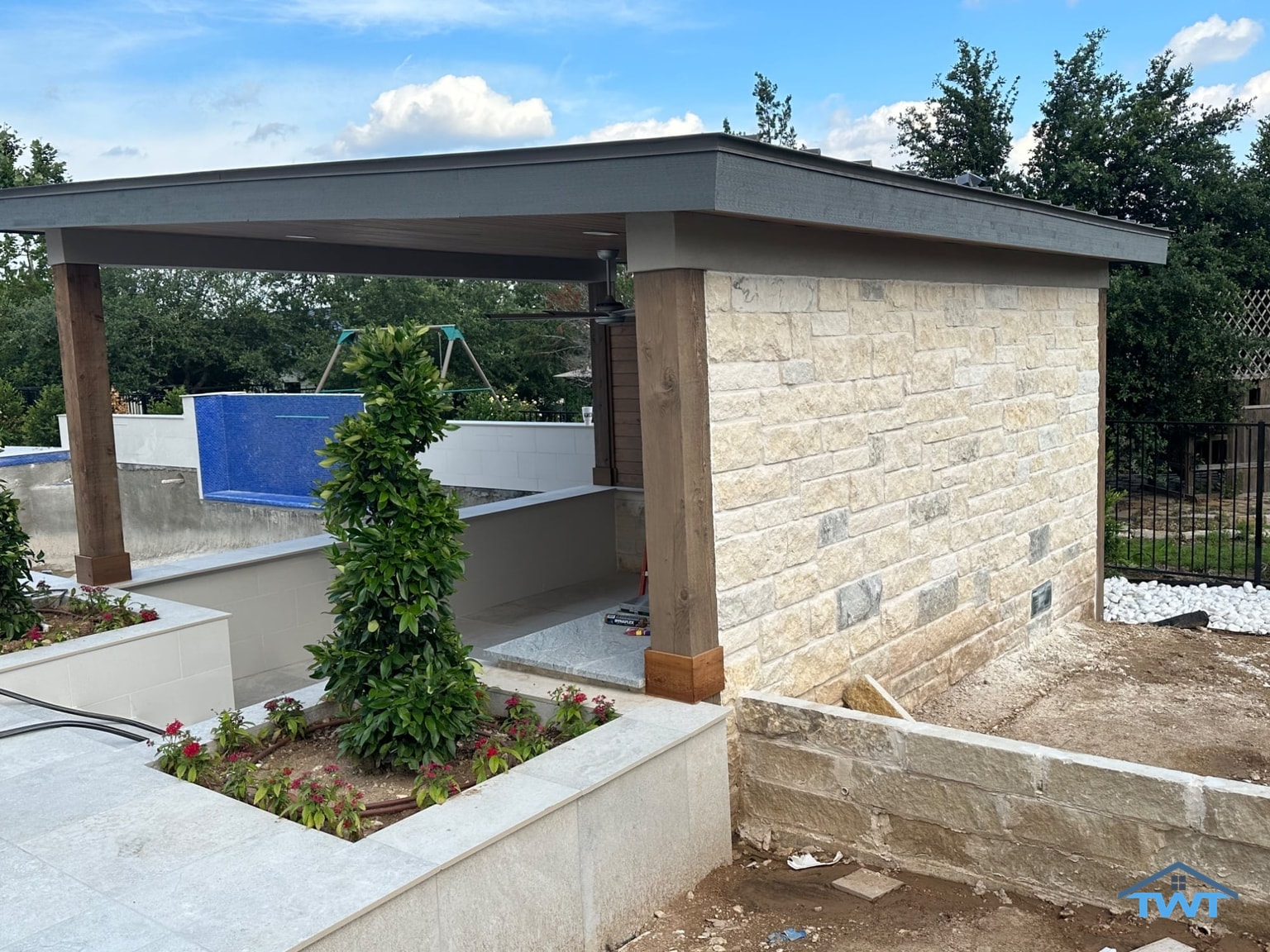
Two neighbors can describe the same backyard structure and use different words for it. One says pool house, the other says cabana. Listings, contractors and inspiration boards swap the names freely, and that makes planning harder than it should be.
This guide sorts out the pool house vs pool cabana question in plain terms. You will see what each one is, what it usually includes, what drives the cost gap, and how Austin's lots, heat and permits shape the decision.
What a Pool House Is and How It Differs From a Pool Cabana
A pool house is an enclosed building beside the pool. It has full walls, a door, and usually a bathroom and storage. Think of it as a small outbuilding that serves the pool.
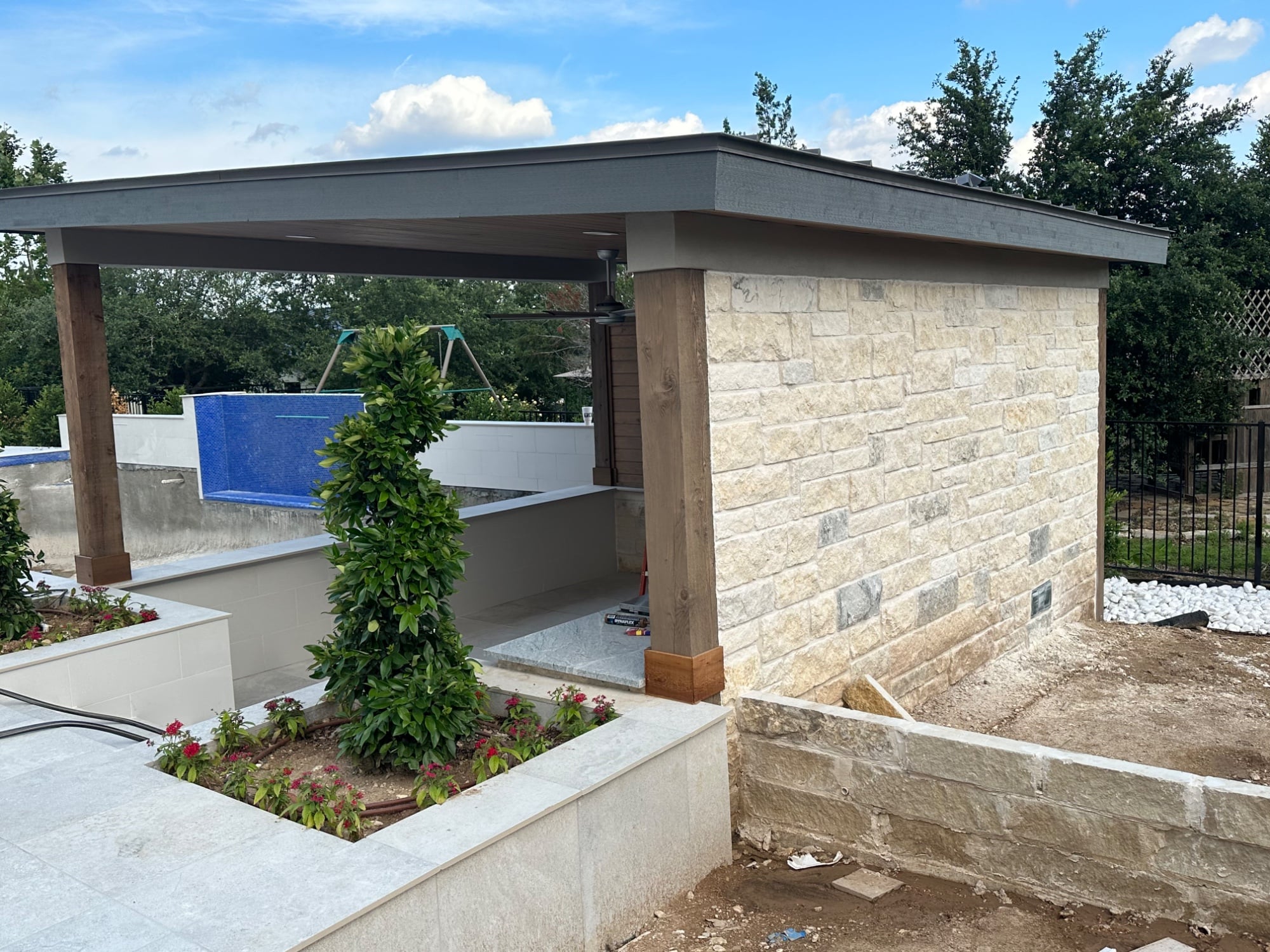
A cabana is a shaded, mostly open space for lounging, changing and serving drinks. It has a solid roof overhead, but the sides stay open or screened, so it feels like part of the pool deck rather than a separate room.
The names overlap because neither one comes with a fixed list of features. A listing might call a roofed seating area with a small changing nook a pool house, while another calls an enclosed room with a shower a cabana. Don't trust the label. Use three practical tests instead:
- Enclosure: Does it have full walls and a door, or open and screened sides?
- Plumbing: Does it have a bathroom with a shower, or no plumbing at all?
- Main use: Is it mainly a room you retreat to, or a shaded spot you lounge in?
If the answers lean toward walls, plumbing and a room, you are describing a pool house. If they lean toward open air and shade, it is a cabana.
Cabana vs. Pavilion: Where the Terms Blur
A pavilion is a freestanding roofed structure with open sides, built for gathering. A gazebo is the same idea on a smaller, often more decorative scale. Both can sit anywhere in a yard.
That is where a cabana overlaps with them. Build a roof on posts with open sides and the three look nearly identical.
What keeps a cabana tied to the pool is its job and its location. It sits close to the water, and it holds the things a swimmer needs: a place to change, dry off, sit in the shade and get a cold drink. Move the same structure to the far corner of the lawn and most people would call it a pavilion.
What Could Your Pool Area Include?
You do not have to pick a label first. Start with what you want to do beside the pool, then let the features decide the structure.
Pool House Features: Full Bath, Storage and Changing Space
Three features move a build into enclosed territory:
- A full bath. A toilet, sink and shower mean real plumbing, drain lines and a finished room.
- Storage. A pool house gives pool gear, cushions, floats and cleaning supplies a dry, shaded home.
- A changing room. Guests can get out of wet suits without walking through the main house.
Many owners add a wet bar, a kitchenette or a laundry area on top of that. Those extras are optional. The full bath is not a detail, though. It is the clearest sign that a structure has become a pool house rather than a cabana.
A pool house is not the right fit if you mainly want shade and a place to sit. You would pay for walls and plumbing you never use.
Pool Cabana Features: Shade, Seating and a Serving Counter
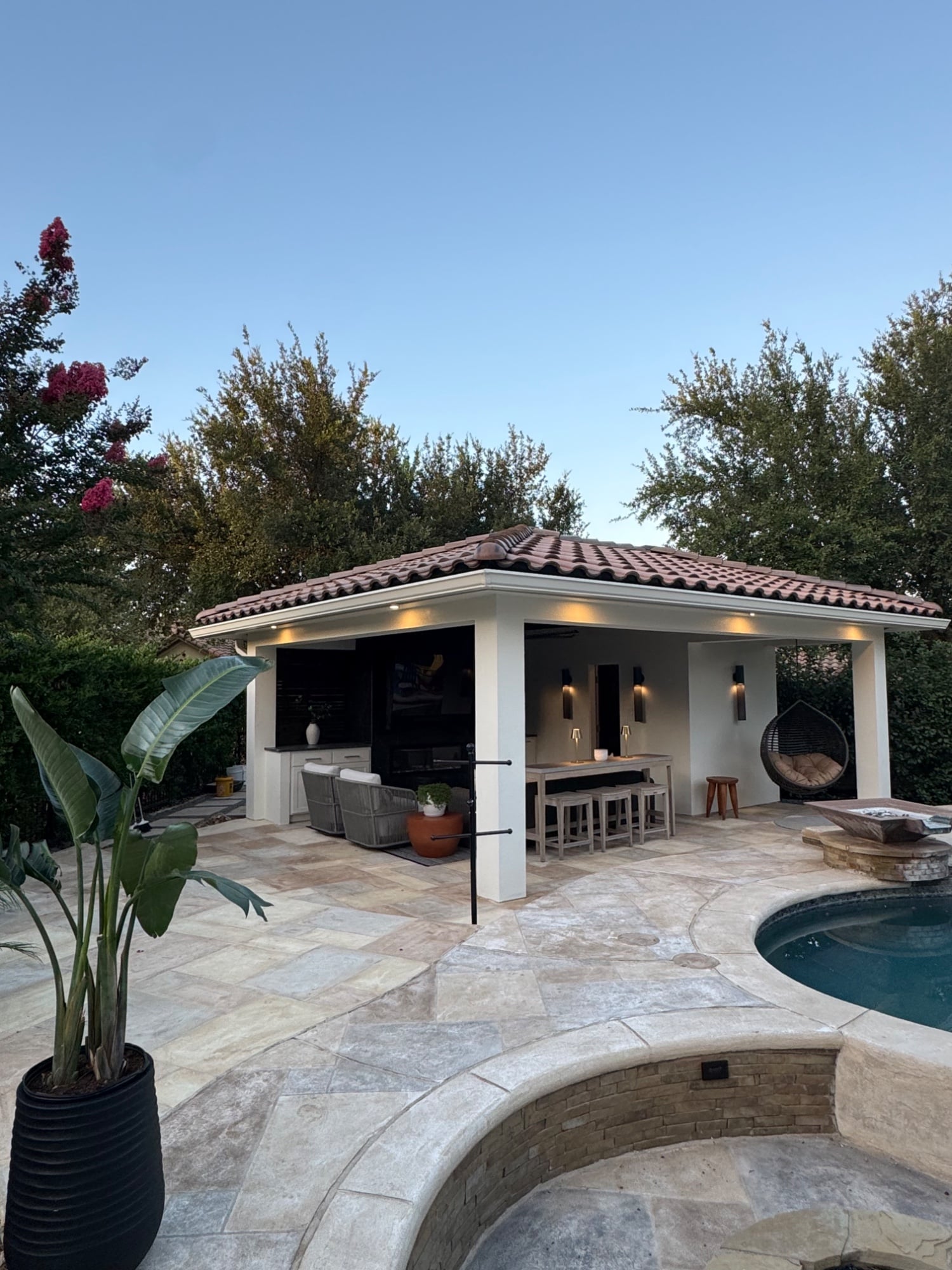
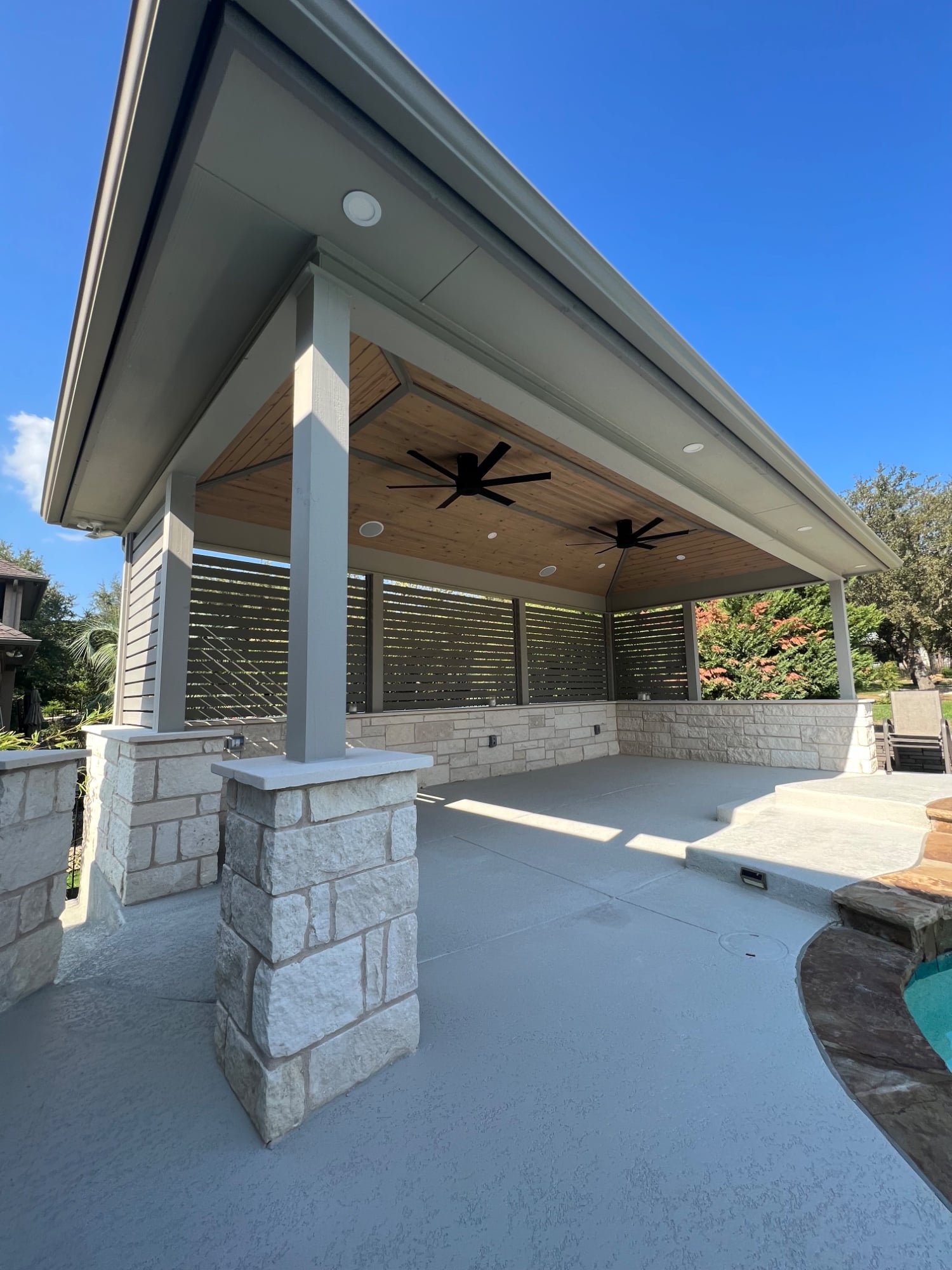
A well-built cabana starts with a solid overhead roof, because shade is the whole point. From there, owners choose among these:
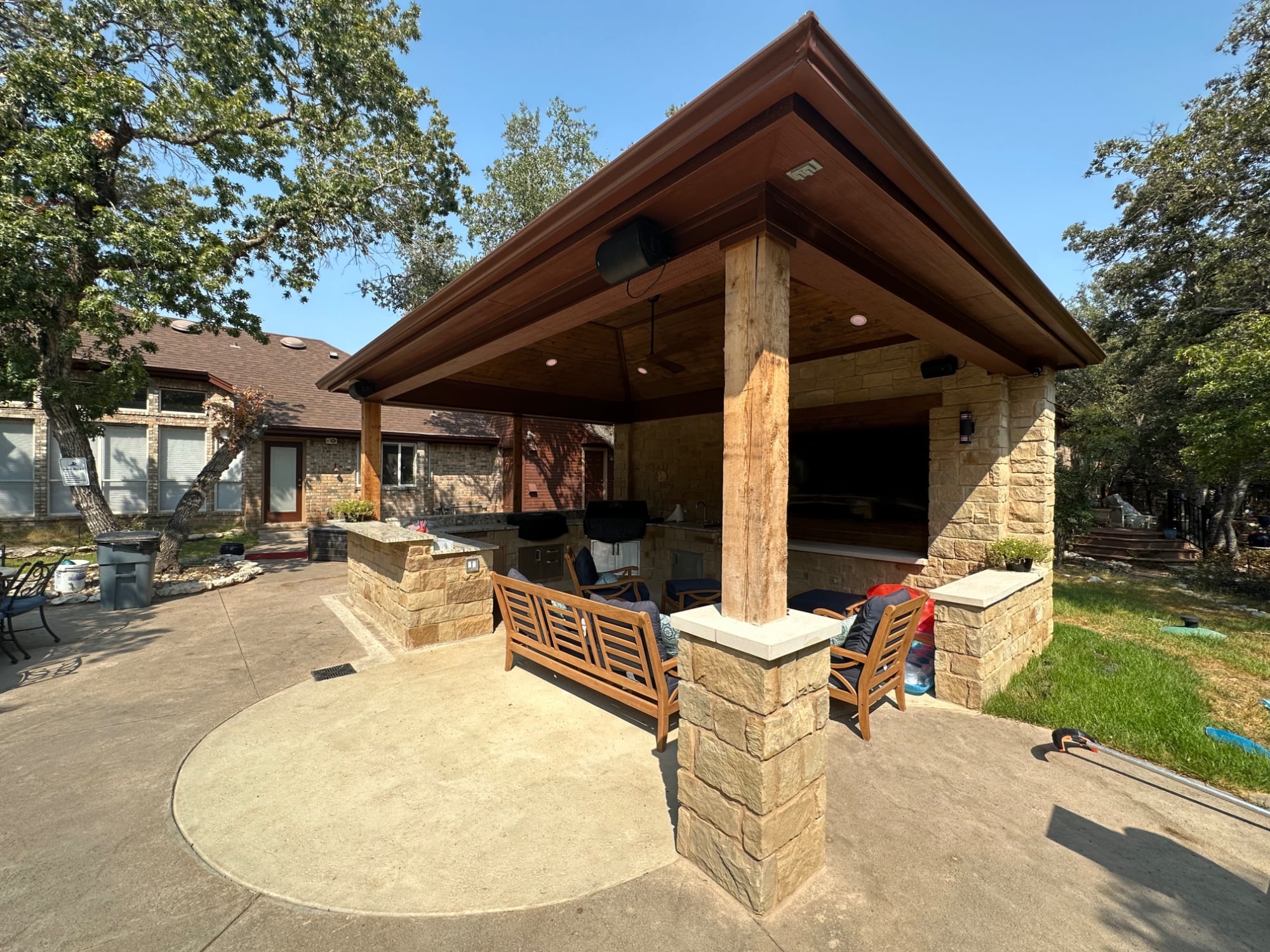
- Open or screened sides
- Ceiling fans and lighting for evenings
- Built-in seating
- A serving counter or a compact outdoor kitchen
- An optional half bath
Motorized screens are a common add-on. They drop down to block low sun and bugs, then retract when you want the view back. TWT is an authorized MagnaTrack dealer, so motorized screens for open-sided spaces can be designed into the cabana from the start. For a closer look at the build itself, see these custom pool cabana options in Austin.
What Drives the Cost Gap Between a Pool House and a Cabana
The gap comes mostly from two things: enclosure and utilities. Exact pricing depends on the site, the finishes and the scope, so a fair comparison starts with the drivers rather than a single number. For current ranges, the Austin outdoor living cost guide is the better reference.
Why an Enclosed Pool House Adds Cost
Every wall you add brings more work behind it. A pool house typically carries:
- Full walls, insulation, windows and doors
- Bath plumbing and drain lines
- Electrical service for lights, outlets and appliances
- Heating and cooling equipment
- Interior finishes such as flooring, fixtures and trim
- Permit review for the added plumbing and electrical scope
Each item also needs a trade to install it and an inspection to sign it off. That is why the cost climbs faster than the square footage alone would suggest.
Where a Pool Cabana Keeps Costs Lower
A cabana has open sides, a lighter build and fewer utility runs. There is usually less to frame, less to finish and far less plumbing to route.
Still, a cabana is not a shortcut. The roof carries the same engineering weight in either structure, and Central Texas wind loads apply whether the sides are open or closed. You are paying for a roof that stays put, so the savings come from skipping the room, not from thinning the structure.
Which Structure Fits Your Lot Size?
Lot size decides more than most owners expect. Setbacks, lot coverage and drainage rules fix what can go where, so check those first.
Small and Narrow Lots Favor a Compact Cabana
Size a cabana around what you will actually use. Picture the seating group and the serving counter, then add room to walk around them. Place it close enough to the pool to be practical, but not so close that it crowds the deck.
A typical Austin case: a narrow side yard with the pool close to the fence line. An open-sided cabana with overhead shade fits that space well. It adds a place to sit and serve without swallowing the deck.
Larger Lots Make Room for a Full Pool House
Size a pool house around its bath, its storage and the path from the pool. Wet swimmers should reach the bathroom without crossing the patio or tracking water through the lounge area. Then add the walls, the door swings and any equipment closet.
A larger backyard can carry an enclosed pool house with a bath and storage, and still leave room for the deck.
An early engineering review can show whether a full bath fits your lot before the design is locked. That avoids a late redesign, which is the most expensive kind.
How Austin Heat and Permits Shape the Choice
Start with permits. A full bath pool house in Austin adds plumbing and electrical scope, and that typically brings the project into permit review. Confirm the requirements with the City early, before you fall in love with a floor plan. The permit basics for covered backyard structures in Austin give useful context, and a pool house with plumbing still needs its own check.
This is one reason a single accountable team helps. If you are comparing builders, how to choose a design-build contractor lays out what to look for. TWT Outdoor Living is a family-owned design-build company in Austin that takes a project from concept and 3D visualization through engineering, permitting and build, so the pool house-or-cabana call gets checked against engineering and permit requirements before construction starts, not after.
Designing for Central Texas Heat and Shade
Texas sun drives the design. A structure that looks great in a rendering can be miserable at 4 p.m. in August if nobody thought about where the sun lands.
Take a cabana on the west side of the pool. It catches the afternoon sun, so roof depth, shade orientation and ceiling fans do most of the comfort work. A solid roof beats a slatted one for that job. Airflow matters as much as shade, which is why open sides and fans earn their place.
An enclosed pool house flips the problem. Walls hold heat, so the room needs properly sized cooling to stay usable. An undersized system runs all day and still loses.
Upgrade Paths: Start Small, Then Add Later
You do not have to build everything at once. Many owners phase the work, and two paths come up most often:
- Cabana to something more. A cabana can gain a half bath, a kitchenette or screens later.
- Pool house to guest quarters. An enclosed pool house can grow into a place where visitors sleep. If that is where you are headed, look at casita and guest house designs before you settle the floor plan.
Phasing has a limit. An open-sided cabana cannot simply become a bedroom later without new walls, new systems and a fresh permit check.
Planning Utilities Now for Later Upgrades
Running utilities during the first build is far easier than opening finished walls later. Plumbing lines go in before the slab is poured, and electrical conduit goes in before the walls close.
Even if you skip the bath today, ask your builder to stub out drain lines and size the electrical service for what you might add. You pay a little now and avoid cutting concrete and tearing into finished surfaces down the road.
Choosing Among Backyard Pool Structure Options
Run through this short decision check before you commit to a design:
- Main use. Decide whether you want a shaded place to lounge and serve, or a room with walls and a bath.
- Space and setbacks. Measure the lot, then check setbacks, lot coverage and drainage. Those rules decide what fits.
- Bath or kitchen needs. A full bath points to a pool house. A counter, seating and fans point to a cabana.
- Site review. Have engineering and permit requirements checked against your actual lot.
You bring the vision, we handle everything else. When you are ready, start your project with TWT and our design-build team will review your own lot, then walk you through the options on TWT's pool cabana and pavilion services page.
Frequently asked questions
What is the concept of a pool house?
A pool house is an enclosed building beside the pool, usually with a bathroom and storage for pool gear. It works like a small outbuilding for swimmers, with walls, a door and often a changing area.
What's the difference between a cabana and a gazebo?
A cabana is tied to the pool. It is a shaded, mostly open space for changing, lounging and serving, placed close to the water. A gazebo is a smaller, often more decorative roofed structure that can sit anywhere in the yard and has no pool-specific job.
What do you call a pool inside a house?
That is an indoor pool, built inside the main structure. A pool house is different: it is a separate building next to an outdoor pool, with a bath and storage rather than the pool itself.
Can a cabana have a bathroom and still be a cabana?
A half bath is a common option on a cabana, so yes. A full bath with a shower is the clearer sign that the structure has become a pool house, because it brings enclosed walls, drain lines and more permit review with it.